Every participant in every stage is speaking insincerely, feigning ignorance while knowing the truth, creating anxiety, panic, and a distortion of reality.
The popularity of OpenClaw in China is turning into a magical realism drama.
It's clearly a niche geek tool that requires command-line configuration and installation, manually configuring Docker and API keys, yet it's attracting students, workers, and elderly people who don't even understand how to use a computer and whose daily cyber life revolves around scrolling through their phones, all lining up to install it.
It's clearly a niche geek tool that requires command-line configuration and installation, manually configuring Docker and API keys, yet it's drawing crowds of people who don't even understand how to use a computer, and whose daily cyber life revolves around scrolling through their phones, all queuing up to install it.
Every participant in every stage is speaking insincerely, feigning ignorance while knowing the truth, creating anxiety, panic, and a distortion of reality.
It's clearly not a fully packaged tech product; it's just a prototype on GitHub. Yet, it's been portrayed as a mature solution capable of solving all everyday problems, a super tool readily available to everyone. It's clearly very time-consuming and labor-intensive to assemble and maintain, and also expensive (in terms of tokens). However, because it's "open source," it's packaged as a free, time-saving, and low-cost tool for lazy people (Agent), capable of doing anything. It clearly sends your private data, including but not limited to documents, photos, and videos, to the model vendor whose API is being called. However, because it's installed on your own computer, the story is told that data sovereignty belongs to the user, giving most people a false sense of security that "the model is running on their own device." It clearly has an architecture riddled with repeatedly disclosed security vulnerabilities and backdoors, yet some major tech companies dare to conduct street-level promotions, installing this thing on ordinary people lacking basic information security knowledge; some local government departments are even launching large-scale "lobster cultivation" programs, replacing genuine information technology innovation with unprotected operation. It has clearly spawned various "Claws," and major domestic language model developers have all released wrapper versions, which are at least easier to use and safer. However, the Lobster fundamentalists only advocate the original, outdated version. They have a weak sense of copyright, but are generous with open-source projects. It should clearly be the inspiration for open source. From Chat to Coding to Claw, the increasing autonomy of agents and their independence from human-computer interaction interfaces is a trend, inspiring entrepreneurs to reconstruct the future of agents. But most people don't care about these things; they are only anxious or celebrating about the Lobster core itself. It was clearly a tool to empower a minority, but the masses now perceive it as a cyber pet. For a small group of humans, Agents are tools for liberating and developing productivity; for the majority, Agents are their substitutes. Treating substitutes as coveted toys is like a mouse acting as a cat's companion. A craze, a frenzy, every aspect develops in a direction that defies common sense, and almost everything that defies common sense becomes consensus. The situation is so bizarre that there's only one possibility: everyone involved is saying one thing but meaning another, feigning ignorance while knowing the truth, and creating anxiety, panic, and a distortion of reality. I've never seen a technology or product with such a strong geeky character spread and become so ubiquitous in China as OpenClaw.
Deng (a derogatory term for someone who engages in online activities) doesn't discriminate based on age. If someone is "Deng-like" (in a derogatory sense), they will generally exhibit the following behaviors: pretending to be knowledgeable and far-sighted, displaying extensive knowledge, being fond of lecturing, skilled at PUA (personal manipulation) to create anxiety, always thinking of helping others, bringing them on board, getting them to follow them, and then profiting from it.
Deng (a derogatory term for someone who engages in online activities) doesn't discriminate based on age. If someone is "Deng-like," they will generally exhibit the following behaviors: pretending to be knowledgeable and far-sighted, displaying extensive knowledge, being fond of lecturing, being skilled at PUA to create anxiety, always thinking of helping others, bringing them on board, getting them to follow them, and then profiting from it.
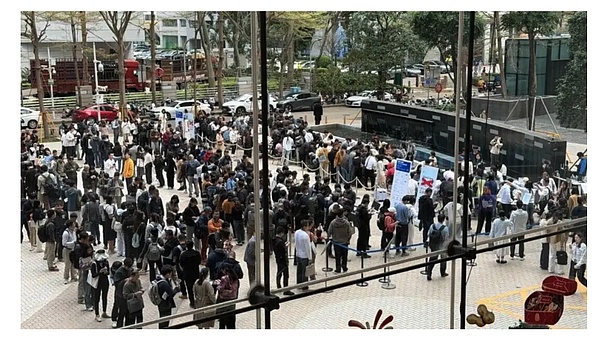
People with an overly aggressive "Deng-style" (a derogatory term implying a tendency towards charlatans or fraudsters) inevitably possess a certain air about them. OpenClaw's popularity in China is precisely due to this overly aggressive "Deng-style." From my observation, OpenClaw's journey in China from a geek game to a chaotic phenomenon can be roughly divided into four stages. Each stage has different participants, stakeholders, and overt or covert demands. The first stage, roughly from mid-January to early February, saw OpenClaw constantly changing its name, from Clawbot to Moltbot and back to OpenClaw. During this stage, the main users of OpenClaw, both domestically and internationally, were very similar: primarily developers and tech geeks. That was the stage where Chinese developers frequently submitted pull requests to OpenClaw, developing extension projects. With the increasing popularity of OpenClaw among developers, Kimi 2.5, MiniMax 2.5, and GLM-5 also became the main open-source models for OpenClaw integration—significantly increasing their API call volume, a key competitive indicator. Offline gatherings and hackathons surrounding OpenClaw also began to be held, and the atmosphere was quite normal. Venture capital firms (such as ZhenFund) and AI communities (such as Way to AGI) held "lobster parties," valuing the imagination that OpenClaw brought to Agent entrepreneurs, and taking the opportunity to harvest some startup projects derived from the OpenClaw open-source platform, or potential entrepreneurs. After all, OpenClaw's technical highlights, such as its continuously running Agent loop, locally documented memory system, and Agent-to-Agent (A2A) communication protocol, are well worth further practice and improvement. It's worth mentioning that SeconMe, an Agent-to-Agent startup in Hangzhou, held a lobster-themed hackathon before the Spring Festival, and I was a judge. The projects showcased were all closely aligned with these key technical points, which I found quite constructive. At this stage, OpenClaw was becoming increasingly popular in the AI ecosystem, but it hadn't quite reached its full potential. Developers naturally have a desire to share; they still want to create better products or prototypes, and communication and inspiration are paramount. The second stage, roughly from before the Spring Festival to the long holiday, that is, from early to mid-February, saw a significant turning point and change. What I call the "early adopter" stage of tech kitsch, is also the initial stage when OpenClaw starts to taste good. During this stage, OpenClaw's user base has expanded to the entire broader AI ecosystem in China. Developers and community contributors are no longer the main users; instead, they are investors focused on the AI field, AI KOLs, internet veterans eager for a second spring, AI product managers, and operations personnel. To put it bluntly: the majority are liberal arts graduates. I myself couldn't resist jumping in during this stage, only to quickly abandon it. These individuals share the following characteristics: they lack firsthand experience in developing large language models and agents, but possess basic AI knowledge, understand the characteristics of different models, have used multiple agents, know what APIs and MCPs are, and have a concept of building a personal agent in the cloud or locally; many can get started immediately. Their shared, underlying psychological characteristic is a strong desire to prove themselves as tech enthusiasts, technically savvy, and at the forefront of AI; they are curious about all new AI technologies. They are terrified of being told they don't understand and worry about falling behind. They exhibit FOMO (Fear of Missing Out), and their ability to master AI and demonstrate it to others is a crucial source of identity and psychological security within the AI ecosystem. Therefore, you'll see some internet veterans who still have some technical skills and can deploy Lobster themselves sharing their omnipotence in Lobster through highly performative live streams, posts, and articles—mostly driven by this mentality. The image of these resilient veterans playing the role of curious children is sometimes quite unsettling. The intriguing OpenClaw on-site installation and deployment service also emerged during this period. It's important to understand that many liberal arts students in the broader AI ecosystem can't overcome the Lobster installation and deployment hurdle that deters 99% of ordinary people. They don't know how to install it, but they're absolutely confident in their ability to use it flawlessly. Once they receive on-site service, they're ready to go. However, they don't want others to know they received on-site installation service. Don't ask; if you do, they'll say they installed it themselves. So, although there were already lobster installation services available at this stage, it felt very clandestine and was difficult to make it popular openly. After having their own "Lobster" (AI assistant) and using it for a while, many of them will do the following: They will encourage those around them who haven't yet deployed Lobster to do so as soon as possible to keep up with the cutting-edge AI trend; They will actively share their experiences and insights using Lobster, many of which are exaggerated or even fabricated; They will post on social media, predicting the arrival of a new AI era and claiming to be at the forefront of this new era; They will create Lobster tutorials, prepare to sell courses, and become AI... Internet celebrities; Lobster gatherings scattered throughout major cities, sharing their lobster farming experiences. … See, the flavor is immediately apparent. The active figures and postures of these individuals marked the true beginning of OpenClaw's mainstream adoption, bringing with it a crucial shift: OpenClaw began to be shaped into an all-powerful, hands-free agent solution, a best-in-class solution that everyone should own. However, OpenClaw's most fundamental attribute—a prototype of an agent, not a truly "usable" product for ordinary people—was almost deliberately ignored in the narratives of these AI KOLs, self-media personalities, and "lobster ambassadors." Furthermore, the use cases they shared were largely theatrical. For example, using lobsters to push daily AI news, finding trending topics on Xiaohongshu (Little Red Book) self-media, and organizing computer folders—these most frequently mentioned cases can all be achieved using Claude Code, Claude Skill, and Claude Cowork. At least our company had an AI bot pushing news hotspots by the end of 2023, and I myself have built several Skills for writing and industry analysis in the past month or so; while Claude Cowork is definitely a master at organizing computer folders. Those who only talk about OpenClaw either genuinely haven't used Claude's many tool combinations, or they're deliberately sensationalizing the topic, overemphasizing the lobster. Someone said they've used OpenClaw to order takeout milk tea, which is basically made up. Alipay and Meituan won't give you the interface, and payment won't pass—unless you write your payment password in plaintext in a configuration file. If you actually did that, then I admire you. Some people claim to have made $115,000 a week on Polymarket using OpenClaw, with OpenClaw even officially endorsing it. However, arbitrage on Polymarket is a quantitative strategy relying on specialized algorithms, millisecond-level response times, and custom systems that directly connect to exchange APIs. OpenClaw, regardless of whose model it uses, experiences second-level latency in inference, and token consumption is charged per transaction—it's too late for that. Did you perhaps set up an API to push notifications to WhatsApp, informing you that you made money on Polymarket using other quantitative tools? My China Merchants Bank sent me a text message confirming my salary was deposited; can I say that China Merchants Bank earned this money for me? Here, I must mention Peter Steinberger, the developer of OpenClaw. He is undoubtedly a very intelligent developer and entrepreneur, but judging from his interactions with project contributors and his social media posts, he seems somewhat abstract, casual, and has a performative personality. He clearly had no intention of curbing any exaggerated descriptions of OpenClaw, nor was he willing to respond to criticisms of OpenClaw's bloated code and user information leaks; in fact, he deliberately avoided them. He enjoyed and indulged those exaggerated descriptions of OpenClaw with ulterior motives, conspiring with China's "Lobster Deng" (a derogatory term for those who exploit OpenClaw). At least in the Chinese context, there are almost no stories of Lobster deployment failures, Lobster arbitrarily using credit cards, or Lobster deleting the codebase; if there are, they are all from overseas users. For Chinese users, they are all success stories. The traditional Chinese virtue of "making a fortune quietly" is completely absent in Lobster; they want the whole world to know. Therefore, when Peter Steinberger announced his joining OpenAI, I wasn't surprised at all. Don't be fooled by his initial rise to fame by associating himself with Claude's name and leveraging the tool's capabilities. He clashed terribly with Anthropic's precise, restrained, and explainable narrative style, but was a perfect fit for OpenAI's penchant for sensationalism and exaggerated claims. In fact, the moment Peter Jackson announced his joining OpenAI, the OpenClaw craze in Silicon Valley essentially died down; everyone seemed to have given up and gone about their business. Even tech giants like Gary Marcus and Andrej Karpathy criticized OpenClaw's task completion and safety issues. But in China, the fire couldn't be extinguished. The emergence of OpenClaw satisfied the interests of various parties: tech enthusiasts used it to prove they were indeed geeks, capable, and cutting-edge; AI KOLs relied on it to gain exponentially growing traffic; and large model, cloud service, and inference engine vendors used a variety of "success stories" as bait, leveraging the ubiquitous "lobster craze" to sell their tokens. In Silicon Valley, token consumption still relies on large, medium, and small enterprises, but in China, once the opportunity is gone, who knows if it will ever come again? Therefore, throughout the Spring Festival, the "lobster craze" was a tacit conspiracy among everyone, requiring enlightenment, preaching, dragging everyone into the fray, PUA (personal manipulation), and promotion. The third stage, from the end of the Spring Festival holiday to around March 5th, is the period when OpenClaw truly broke into the mainstream. I call this the "early stage of counterintuitive frenzy among the masses." During this stage, China achieved its KPI for the new AI narrative in 2026. In this stage, OpenClaw has "graduated" from the broader AI ecosystem, much like DeepSeek did before the Spring Festival in 2025. If you consider yourself a knowledge worker, highly educated, a trendsetter in society, and unwilling to be part of the silent majority, you've at least heard of OpenClaw and should at least try it yourself. The baton for propelling lobster into the mainstream has been passed from social media influencers and KOLs within the AI community to those with even greater influence. The most significant sign is the arrival of the crypto gurus who are involved in Web 3.0. With these crypto enthusiasts, OpenClaw is directly linked to the ticket to Web 4.0. "Web 1.0: Read-only; Web 2.0: Interactive; Web 3.0: Ownership; Web 4.0: Action." "OpenClaw empowers ordinary people with digital employees/AI avatars; one person + AI = a super individual/super company." "Mastering it transforms you from a content consumer into a rule-maker, task executor, and value creator." "Creators vs. Bystanders: Those who can autonomously produce, execute, and monetize using AI tools vs. those who only consume content and passively receive services." "In 2026, humanity will no longer be divided into men and women, but only into creators and bystanders. Mastering OpenClaw is the key to Web 4.0." "The Ticket to the Era" As I copied and pasted these words, my hands were trembling; I felt like I'd already committed a crime. I could practically guess what these habitual scammers would do next. Even without boarding the Web 4.0 bandwagon, this rhetoric is universally persuasive. Big KOLs can casually post these things, and the long-legged "crypto girls" who've made it in the crypto world can transform into "lobster girls," spouting platitudes on social media and hooking up with tons of people. So you see, there are even more lobster parties after the Spring Festival, and they're the kind that sell tickets, packed to capacity. Many attendees don't even know who the agents are, but they're all eager to try their luck and want to use lobsters. And so, the lobster-themed home installation service really took off. Because those receiving the service no longer acted furtively; they were open and honest, readily admitting they couldn't do it, and accepting the service without a second thought—it was as if the brothel, Chunxiangyuan, had moved from Tehran to Amsterdam overnight. You can imagine the scene: newly minted, long-legged "lobster ladies" waiting for smiling, tech-savvy men to install the equipment; highly efficient, long-legged "lobster ladies" installing the equipment for greasy, middle-aged traditional business owners; hundreds of people crammed into a multi-functional hall, all wearing lobster hats, listening to the lobster preacher on stage, spitting as he lectured them to be creators, not bystanders… Can you imagine a more greasy and slick scene than this? I've observed that many of my classmates born in the mid-90s and 2000s are fed up with OpenClaw, starting after the Spring Festival. They feel that discussing how to play with lobsters now is like joining a Ponzi scheme. More importantly, at this stage, what "lobster" actually is is no longer important. VCs hope to find more startups based on the OpenClaw framework, whether based on sustainable memory, A2A, or next-generation agent interaction forms. However, the narrative surrounding OpenClaw has completely deviated from their expectations, and agent startups have hardly benefited from the OpenClaw phenomenon. This is what I find most regrettable. Model manufacturers are anxious; Kimi and MiniMax have launched their own derivative versions of Claw, which are deployed in the cloud. The derivative versions of Claw released by companies like Zhipu, Tencent, Alibaba, and Xiaomi are all installation packages that can be downloaded to local devices with a single click. Purely schema-based companies, such as Zhipu, Jieyue, Kimi, and MiniMax, aimed to use the OpenClaw narrative to drive traffic to their platforms, seize this once-in-a-lifetime opportunity to monetize their tokens, dominate the OpenRouter charts for a few more days, and boost their market capitalization or valuation—and they succeeded. The tech giants' involvement stems from only one reason: FOMO (Fear of Missing Out). There's a pattern: the more a large company deploys or replicates OpenClaw across all its business lines, the stronger its FOMO regarding this new AI phenomenon, and the weaker its actual AI foundation. Conversely, the more composed a large company is, and the less it forcibly links OpenClaw to its core business, the clearer its AI strategy. I won't name any of their illustrious names here. However, the motivations and interests of the basic model startups and tech giants are conflicting with those who started this "lobster craze." Those issuing OpenClaw entry tickets have consistently touted that the original version is the real lobster, and only by controlling the real lobster can you become a rule-maker, task executor, value creator, and master of destiny. The former wants their model's tokens to actually circulate, ultimately attracting professional users; but those selling OpenClaw entry tickets are touting an opportunity to change one's life. How can they persuade people to engage in gray-market activities on a relatively safe derivative version of OpenClaw? This is a period where collusion has been strengthened like never before. Those who got involved knew that OpenClaw's path towards a pyramid scheme was dangerous and would inevitably lead to trouble; they knew OpenClaw wasn't a complete product, only suitable for 1% of users; they knew that providing an API key for the access model to Lobster was equivalent to leaking a password; they knew that OpenClaw's local self-control was just a technological illusion… But they all chose to remain silent. Lobster's rise to fame is perfectly understandable; it perfectly aligns with the current interests of all parties. In my opinion, it's all DeepSeek's fault. If DeepSeek had released V4 or R2 during the Spring Festival, none of this bizarre situation would have occurred. Since DeepSeek and Manus, the Chinese AI community has lacked a grand narrative for a long time. In an AI era that so emphasizes storytelling, the absence of a narrative means no excess capital flow, no growth, and no expectations. The US currently has a very grand AI narrative: how AI will disrupt the massive SaaS industry. But this supposedly disruptive technology in the US has never truly existed in China, resulting in a complete disconnect between the AI narratives of the two countries. Large Chinese model manufacturers dream of creating true SaaS, and small, medium, and large enterprises are lining up to use their corporate credit cards to generate massive amounts of virtual currency, but it's not happening. Just when China's AI urgently needed a new narrative to continue the momentum of DeepSeek, OpenClaw appeared at the perfect time. A year ago, DeepSeek created an inspiring narrative of "Chinese open source defeating American closed source," satisfying the overall interests of China's AI ecosystem: KOLs gained traffic, AI infrastructure and cloud vendors sold tokens and computing power, large companies' AI applications gained users, and open source peers increased their visibility in the global AI community... Everyone was happy to see this happen. Now, OpenClaw is also being given high hopes—it must be a huge story about the future, and it must bring broad benefits to the domestic AI ecosystem. Everyone is fueling this fire; nobody wants to extinguish it. Anyone who tries to put out the fire or dampen the enthusiasm is blocking everyone's path to wealth. For example, me. The fourth phase, which has lasted for the past two weeks, has seen scenes of elderly people queuing up to install lobsters in both Beijing and Shenzhen. Lobsters have become a hot topic of conversation, attracting attention from mainstream media and government agencies. From a simple project on GitHub to plunging into the vast sea of public interest in China, OpenClaw took only four months.
In his famous book *Crossing the Chasm*, American organizational theorist Geoffrey Moore divided the adoption cycle of technology products into five stages: innovators, early adopters, early adopters, late adopters, and laggards. Moore's core theoretical contribution is that there is a natural, insurmountable gap between "early adopters" and "early adopters" in technology application, because there is no natural transmission between the two. The former wants the possibility of change and accepts the imperfection of the product, while the latter wants a mature solution.
In his famous book *Crossing the Chasm*, American organizational theorist Geoffrey Moore divided the adoption cycle of technology products into five stages: innovators, early adopters, early adopters, late adopters, and laggards.
Preview
Gain a broader understanding of the crypto industry through informative reports, and engage in in-depth discussions with other like-minded authors and readers. You are welcome to join us in our growing Coinlive community:https://t.me/CoinliveSG