Will MicroStrategy's STRC flywheel completely change the cyclical trend of BTC?
Has BTC bottomed out? The price rebound is due to the massive influx of funds brought in by Strategy's sale of STRC.
 JinseFinance

Author: Viktor, Source: Crypto Narratives, Translated by: Shaw & Jinse Finance
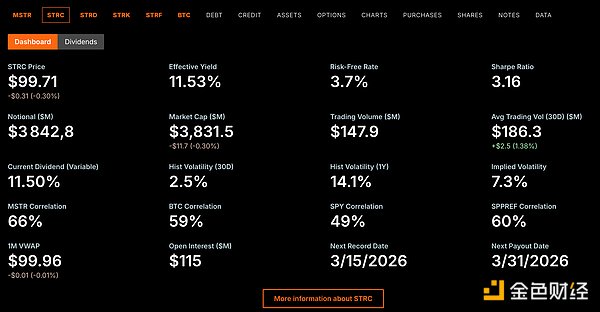
STRC is a yield-generating tool backed by Strategy's Bitcoin treasury. Its dividend yield is dynamically adjusted to maintain a price close to its face value ($100).
Currently, you can obtain an annualized yield of 11.5% through this highly stable tool, with monthly dividends and extremely high risk transparency.
STRC is essentially a way for Strategy to translate market yield demand into structured Bitcoin buying.
STRC is essentially a way for Strategy to translate market yield demand into structured Bitcoin buying.
This structure allows for large-scale expansion without increasing MSTR's leverage ratio—provided that Strategy simultaneously operates the ATM market-price issuance mechanism for both STRC and MSTR (requiring mNAV > 1x). This means Strategy can absorb $10 billion or more of new STRC demand while maintaining a leverage ratio of around 33%, keeping credit risk unchanged. Thanks to the common stock ATM mechanism used to maintain leverage, every $1 of STRC issued will roughly add $3 of Bitcoin to the Bitcoin treasury. A rough calculation shows that if STRC's daily trading volume reaches $100 million at a face value of $100, it could drive $100 million to $150 million in Bitcoin purchases. The Strategy essentially splits Bitcoin risk exposure into two different risk levels: STRC holders receive relatively stable, low-volatility returns; MSTR common stockholders bear the remaining gains and losses in Bitcoin's price movement. As Lavoisier famously said, "Nothing perishes, nothing is created, everything is transformed." The entire structure is designed to increase the number of Bitcoins per share (bps) in the long term, which ultimately benefits MSTR common stockholders because it means that MSTR should mechanically outperform Bitcoin. A 5% to 10% pullback in STRC is possible in the short term, but as long as market confidence in this structure remains unchanged, funds will push the price back to near par value through arbitrage. The real risk isn't a sudden collapse, but a prolonged Bitcoin bear market, which could gradually put pressure on this structure. Even in the (extremely low probability) worst-case scenario, the process would be very slow because Strategy has a dollar reserve buffer and dividend adjustment flexibility. If MSTR does collapse, it's unlikely to be a catastrophic crash like Luna/UST; a slow, long-term value decay is more probable. Being bullish on Bitcoin while simultaneously being bearish on MSTR and STRC is logically almost impossible. Regarding Strategy's current risk level (which may change): unless Bitcoin goes to zero first, MSTR is unlikely to truly "die."
Over the past two weeks, $STRC trading volume has increased significantly, and market attention to the product on crypto social media has also continued to rise. Therefore, I think now is a good time to write a new article about Strategy and its new structure.
This will be my fourth article on Strategy (MSTR) and its Bitcoin treasury model. In this article, we will focus on $STRC—which has now become the core preferred stock of MSTR and is currently the core focus of Saylor and his management team.
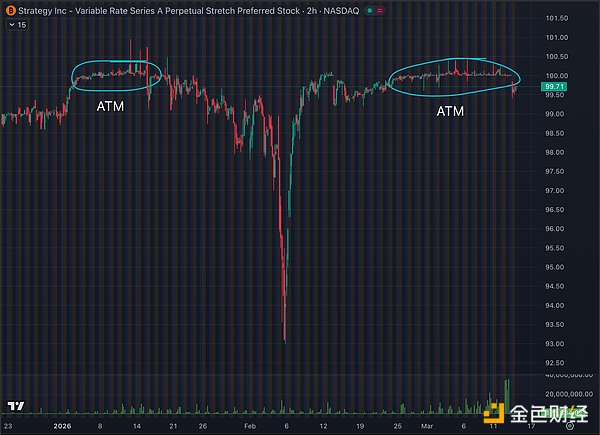
First, let me review the definition of preferred stock: Simply put, it is a debt-like instrument, but essentially still corporate equity. This means that this type of preferred stock never needs to be "repaid," and Strategy will not default on it. In its capital structure, preferred stock has higher priority than common stock ($MSTR), meaning that in the event of company bankruptcy, preferred shareholders will receive repayment before common shareholders. As of now, Strategy has issued five preferred stock offerings ($STRF, $STRC, $STRK, $STRE, and $STRD). The following are the core characteristics of $STRC: It is a short-duration, high-yield credit instrument. Strategy aims to maintain the price of $STRC around **$100 (par value)**, ideally within a range of $99–$100, with fluctuations not exceeding 1%. $STRC pays a monthly variable dividend, currently yielding 11.5%. If $STRC falls significantly below par value, Strategy can increase the monthly dividend yield, enhance product appeal and demand, and drive the price back to par value. If the $STRC price is above $100, Saylor can issue and sell new $STRC shares at $100 through its ATM (Auction Toll Collection) program, effectively creating a price ceiling around $100. If Saylor does not wish to issue new shares through ATM, there is another mechanism: the company can redeem STRC at $101, meaning there is virtually no incentive to buy above that price. Like all other Strategy preferred stock, STRC is perpetual preferred stock, with no expiry date and perpetual existence.
While preferred stock is not strictly debt, it can be seen as a way for Strategy to leverage its balance sheet. Strategy distinguishes between leverage ratio (calculated only as the ratio of convertible debt to Bitcoin reserves) and amplification ratio (convertible debt + preferred stock / Bitcoin reserves), but the amplification ratio is the true measure of MSTR's leverage level.
However, selling STRC (a type of debt instrument) would increase the company's leverage ratio, and he wants to keep the leverage stable. Currently, MSTR's leverage ratio is about 33%, and I think he wants to maintain it around that level. This means that for every $1 of new debt instrument, $3 of Bitcoin must be added to the treasury.
In our example, if Saylor adds $40 million of debt instrument through STRC and buys $40 million of Bitcoin, then he will need to add another $80 million of Bitcoin to the company's reserves.
How would he do it? As I explained earlier: through the ATM market price issuance mechanism of MSTR common stock. He would issue and sell $80 million worth of new MSTR stock, and then immediately use the proceeds to buy $80 million worth of Bitcoin. Conclusion: Through this rough calculation, $100 million in daily STRC trading volume → approximately $40 million in new STRC issuance → a total of $120 million in Bitcoin being purchased and added to the company's treasury. With STRC, Strategy has found a path: directly translating the market's demand for stable returns into buying pressure on Bitcoin. What if STRC demand explodes? Will Saylor be forced to max out his leverage?
I want you to pay attention to another key point: According to the model I just introduced, Strategy can completely triple the market capitalization of $STRC (in other words, adding $8 billion in debt-like liabilities through STRC on top of the current $4 billion market capitalization), while **without increasing the leverage ratio (i.e., credit risk)**.
Saylor already has the full tools to expand STRC to any level required to meet market demand, while maintaining a stable leverage ratio of 33%.
Obviously, the company's nominal debt and dividends payable will increase accordingly, but these will expand proportionally to the Bitcoin treasury, meaning the company will not bear any additional risk from Bitcoin price fluctuations.
First, let me remind you: the STRC's initial dividend yield was 9%. The dividend yield is an adjustable tool used to match the STRC's needs and ensure it trades near par value. Strategy's current guidance is: if the STRC's monthly volume-weighted average price (VWAP) is between $95 and $99, they will increase the dividend yield by 25 basis points; if the monthly VWAP is below $95, they will increase it by 50 basis points; and if the monthly VWAP is above $101, they will decrease the dividend yield.
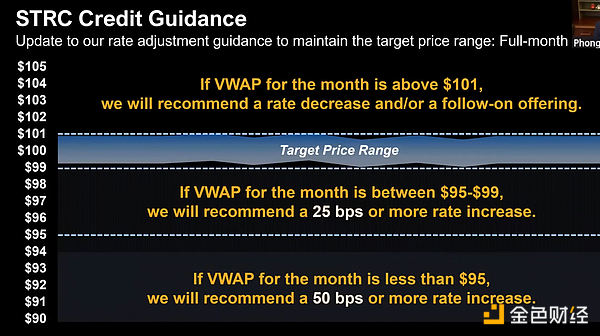
So, simply put, what they're doing now is gradually increasing STRC's dividend yield from 9% to 11.5% to reach an equilibrium, keeping STRC's price stable around its par value of $100 per day. This week has been STRC's most successful week to date, as it not only continued to trade at par value but also with huge trading volumes (approximately $300-400 million per day, compared to a previous average of just over $100 million). The demand for STRC essentially depends on several variables: Credit Risk: What is Strategy's current leverage ratio? In other words, how much Bitcoin is currently backing STRC? This is a direct consequence of Bitcoin's price: if Bitcoin falls, all else being equal, leverage will increase, credit risk will rise, and STRC demand should logically decrease (i.e., STRC price will fall). **Yield:** What is the current dividend yield paid by STRC? The higher the dividend yield, the higher the demand for STRC. **Market Awareness:** How many people actually know about STRC? This is a very important factor in the first few months and even years after its launch, as it generally only increases and, all other things being equal, significantly impacts STRC demand. **Market Confidence:** After observing STRC trading stably for several months and consistently paying dividends, how many people are willing to invest with confidence? This is a special factor because confidence can fluctuate greatly: if STRC trades within a very narrow range around $100 for a long time, more and more people will consider it safe; but if there is a sudden 10% drop, this trust can quickly dissipate. Since its launch, we've seen increased credit risk (due to Bitcoin's 45% drop from its all-time high), but also increased yields, awareness, and confidence. One factor negatively impacted demand, while the other three had a positive effect, and we've finally reached the ideal state where STRC is stable at its $100 face value. At a Bitcoin price of around $68,000, an 11.5% yield was needed to keep STRC at face value. For a product less than eight months old, this seems quite constructive to me. Saylor projects Bitcoin will achieve a 20%–30% annualized compound growth rate over the next 20 years. As I explained in detail in a previous article, under these assumptions, issuing debt at 11.5% interest to buy an asset growing at 25% annually is perfectly reasonable. Theoretically, you could even pay higher interest rates and profit from the spread between your interest costs and Bitcoin's expected annualized return. In my opinion, the most likely path is: STRC demand will continue to grow, while Strategy will gradually lower its dividend yield back to 10% (or even lower in the long term) to curb demand and reduce its own interest costs. What would happen if everyone tried to sell STRC? In that case, the price of STRC would definitely plummet! However, this has happened several times with this product: August 2025: A 6% drop from $98 to $92; November 2025 sell-off: An 11% drop from $100 to $89; February this year: A 7% drop from $100 to $93. You must understand one thing: Saylor's publicly stated goal is very clear: to keep STRC within a narrow range around $100, and STRC has become the core focus of Strategy. Therefore, if STRC's average price falls below $99 over a month, Strategy will increase the dividend yield to stimulate demand and bring the price back to $100. As long as investors believe Strategy has the ability to do this, there will always be bargain hunters below $100, attempting to push the price back to par value through "arbitrage trading." In the short term, panic among holders could cause a 10% price drop, but if you believe in the mechanism Strategy designed, the price will return to par value within days or weeks—history has proven this many times. What prevents the dividend yield from rising indefinitely? Let's assume that STRC never returns to par value. Does this mean Strategy must continuously increase the dividend yield? And since there's no official cap on the dividend yield, could this become a death spiral? Actually, no. First, you need to understand that the so-called dividend "adjustment guidelines" are not legally binding on Saylor. Ultimately, the company can decide its own dividend yield, and can stop increasing it even if the monthly average price is below $99. Simply put: if they expect Bitcoin to grow by 20%–30% annually, they will likely internally set a tolerable "maximum dividend yield," such as around 15%. Once this level is reached, they can stop raising the yield regardless of the STRC trading price. Also remember: the dividend yield can be adjusted monthly. If you expect Bitcoin to rebound after the bear market, then the "high dividend yield" doesn't need to be maintained indefinitely. As the price of Bitcoin rises again, the credit risk of STRC will decrease, demand will naturally increase, and the price will return to par value. At that point, the company can lower the dividend yield again. In the long run, even if STRC's dividend yield rises to 13% during periods of market stress, it is entirely possible that it will eventually fall back to around 8%. In the next section (Risk 4 below), I will outline the worst-case scenario if Bitcoin enters a prolonged bear market and Saylor is forced to continuously increase its dividend yield. Understanding the Risks This entire article reads as if everything is foolproof, but I don't believe in getting something for nothing. As an STRC holder, what risks do I actually bear? I'll make my position very clear: I believe the current market misprices STRC's risks, and under reasonable assumptions of a slightly optimistic outlook on Bitcoin's price, its risk-reward ratio is very attractive. But I am absolutely not saying that you can get high returns with zero risk. The risks are real and always linked to Bitcoin's performance. However, I believe there's a mismatch between people's expectations of Bitcoin's price movement and their perception of STRC risks. Simply put: if you look at the expectations of crypto-native investors for Bitcoin over the next few years, 95% of them anticipate scenarios that won't have a substantial impact on STRC—meaning, based on their own expectations of Bitcoin, they can achieve returns of over 10% with "low risk." But we still need to seriously discuss the risks. Risk 1: Asymmetry between downside risk and upside potential. The structure of STRC means that if you buy at $100, the upside potential is capped at the annual dividend (currently 11.5%); but historically, the downside potential could be 0% to 10% within a few days. This means that if STRC drops 6% within a week, your temporary drawdown is equivalent to six months' worth of dividends. This will be problematic if you need to exit quickly. If your goal is to hold STRC long-term, the impact is minimal—as long as you believe it will eventually return to $100, you can still exit without loss. (Note: STRC dividends are principal-returning, which incentivizes holders not to trade short-term, as dividends are usually tax-free.) Risk 2: STRC and Bitcoin Plunge in Sync STRC's credit risk is directly linked to Bitcoin's price. You may have noticed that STRC's significant drawdowns often coincide with the most severe Bitcoin sell-offs. This means that this "stable, interest-bearing" asset you've invested in will experience paper losses precisely when you, as a crypto bull, are most vulnerable. Risk 3: STRC trades at a discount for an extended period. Market confidence in STRC's ability to return to par value stems from both its actual credit risk and anticipated risks formed from historical price movements. However, the second factor could have the opposite effect: what happens if everyone expects a 5% drop to be followed by a rebound, but this doesn't happen? Those who bought at the 5% drop will exit, causing the price to fall further, potentially triggering a gradual emotional sell-off and leading to a larger pullback. Let's imagine a scenario: STRC drops 15% and fails to rebound for several consecutive days. Market confidence in the product will gradually erode, triggering even greater selling pressure. In this situation, what can stop the vicious cycle? As always, it ultimately comes down to the price of Bitcoin. Saylor's entire strategy is ultimately based on the expectation that Bitcoin's annualized return will reach over 20% in the next ten years or even longer. What would the worst-case scenario be? Risk 4: The core risk is always Bitcoin's performance. The worst-case scenario for STRC is the one described above, compounded by Bitcoin's inability to recover its strength during a prolonged bear market. Obviously, this scenario involves too many variables to predict precisely, but it will roughly go like this: $STRC will trade below par value, so Saylor will increase the dividend yield monthly in an attempt to bring it back to $100. At some point, the dividend yield will become so high that it becomes meaningless, so he will stop increasing it and no longer adhere to the guidance of "raising the yield when monthly VWAP is below $99." Remember, this is just a guideline; there are no clauses mandating its implementation. Disregarding the guideline will further damage confidence, and STRC may continue to trade at a deep discount, for example, a 40% discount with a 15% dividend yield, corresponding to an effective return of 25%. $MSTR will fall below 1x mNAV, meaning they cannot cover dividends by issuing new MSTR. At that point, Strategy will be entirely reliant on its dollar reserves to pay dividends; currently, its reserves are sufficient to cover dividends for 28 months (2 years and 4 months). As these 28 months near their end, all assets will face greater pressure: BTC, MSTR, and STRC will have more reasons to decline. Once dollar reserves are depleted, Strategy will have to gradually sell Bitcoin. Currently, annual dividends are approximately $1 billion; if this increases to $2 billion, Strategy will need to sell approximately $200 million worth of BTC per month to pay dividends. Alternatively, they could choose to stop paying dividends—at which point the value of preferred stock, STRC, and MSTR would plummet further, leaving them essentially powerless until the price of Bitcoin recovers. This is a rough outline of the worst-case scenario. As you can see, dollar reserves provide a significant buffer against the bear market: theoretically, Strategy could continue paying dividends for over two years without being forced to act, even if it does nothing. Currently, we are in a Bitcoin bear market, with prices around $70,000 (down about 45% from its peak), but $STRC is still trading at par (dividend yield 11.5%), and mNAV is 1.2. Given that I don't believe Bitcoin will experience a two-year bear market (the 2022 bear market only lasted about a year from peak to trough), and that Strategy doesn't even need to use its dollar reserves yet, I believe that at the current leverage level, Strategy's overall structure is quite safe and resilient. The biggest risk, however, is that this model is working too well? As a Bitcoin bull, I believe the core risk associated with MSTR is that it's performing too perfectly. In fact, MSTR already holds about 3.5% of the total circulating supply of Bitcoin, which could negatively impact future demand for Bitcoin as it may begin to undermine the narrative of Bitcoin as a purely decentralized asset. The "digital credit" narrative built around STRC and its high yields has also triggered negative reactions among some in the crypto industry, which could again indirectly affect Bitcoin demand. As I've explained throughout this article, Strategy's Bitcoin holdings will only continue to increase. The only scenario where this won't happen is if Bitcoin enters a deep bear market lasting at least two years. Even then, it would take years of market downturn to slowly deplete Strategy's Bitcoin reserves through dividend payments. I understand why some people are unhappy about MSTR's involvement in Bitcoin, but to me, if this is enough to make you bearish on Bitcoin's long-term prospects, you probably weren't that optimistic to begin with. In my opinion, it's not that serious. Admittedly, Strategy is an entity that holds 3.5% of the Bitcoin supply, but ultimately, Strategy and its Bitcoin reserves belong to its shareholders. Is this really that different from BlackRock holding a similar amount of Bitcoin on behalf of its shareholders through IBIT? Clearly, these are completely different things, and IBIT doesn't face bankruptcy risk, but in my view, they share some similarities: both represent the financialization of Bitcoin, and both are inevitable trends. I don't believe Strategy and STRC will become systemic risks for Bitcoin, but I can see the potential negative impact they might have on the market narrative. In any case, the main purpose of this article is to explain the structure of STRC and Strategy; after that, you can decide for yourself whether to be bullish or bearish.
Has BTC bottomed out? The price rebound is due to the massive influx of funds brought in by Strategy's sale of STRC.
JinseFinanceRegardless of changes in Bitcoin's price action or the capital environment, MSTR is likely to weather the storm; however, when the music stops, investors are more likely to suffer the losses. STRC perfectly embodies this logic.
JinseFinanceSaylor is a genius of our time, often using unusual mechanisms to raise billions of dollars for his company. MSTR remains unaffected by changes in Bitcoin prices or fund flows.
JinseFinanceThe Bitcoin 2025 conference will be held in Las Vegas from May 27 to May 29, 2025. This conference will bring together many industry leaders. Golden Finance has compiled a conference guide to help you attend the conference with peace of mind.
JinseFinanceFractal Bitcoin is the only Bitcoin scaling solution that uses the Bitcoin Core code itself to recursively scale to unlimited levels, built on the world’s most secure and widely held blockchain.
JinseFinanceUnderstand the scalability limits of Rollup and the decision making options for maximizing it.
JinseFinanceThe Bitcoin Asia conference will be held at Kai Tak Cruise Terminal in Hong Kong from May 9 to May 10, 2024. This conference will bring together many industry leaders. Golden Finance has compiled a conference guide to help you attend the conference with peace of mind.
JinseFinanceRekt Builder's investigation reveals Ledger Live's covert user activity tracking, raising serious privacy concerns for Ledger hardware wallet users.
 Kikyo
KikyoLayer 2 of general computing smart contracts on Bitcoin has always been a problem because the Bitcoin network cannot be relied on to ensure the security of smart contracts.
JinseFinance自 2023 年年初 Ordinals 开启 Bitcoin 的 NFT 试验以来,如何在 Bitcoin 上创立丰富的去中心化用例项目,成为行业关注的热点。
 MarsBit