MEXC Scrutiny Intensifies: User Accounts Allegedly Seized
Recent claims of account seizures and lack of transparency at MEXC have raised significant concerns among users, echoing the cautionary tale of FTX's downfall.
 Alex
Alex

Author: f(gautham), co-founder of Polynomial; Translator: AIMan@Golden Finance
On May 22, 2025, a hacker stole $223 million from Sui.
Then, something unprecedented happened.
Sui validators actually banned him from the Sui blockchain network and froze his funds while he was on the run.
This completely subverted our understanding of "decentralized" blockchains.
Here is the bizarre story.
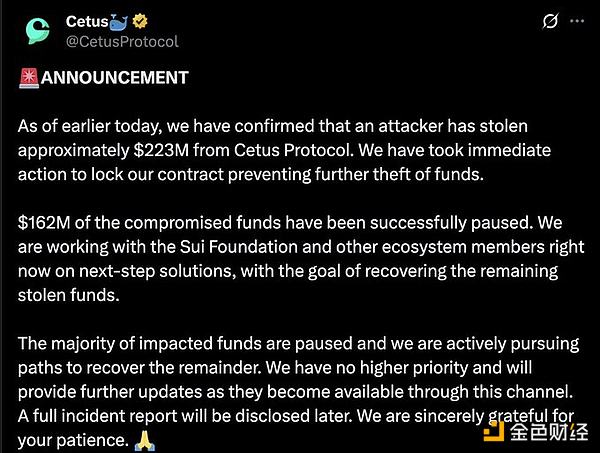
This hacker attack was very brutal. This guy drained Cetus' liquidity pool like his own home.
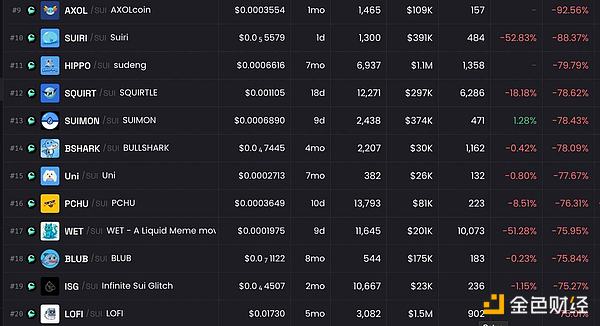
$223 million disappeared in a few hours. SUI memecoins plummeted 75%. USDC was decoupled from the chain to zero. All swaps failed. Coin holders couldn’t even stop losses. It was a bloodbath.
But things are starting to get interesting.
The hacker thought he was unstoppable. He bridged the funds to Ethereum and began to convert them into ETH, and has transferred more than 60 million US dollars to Ethereum.
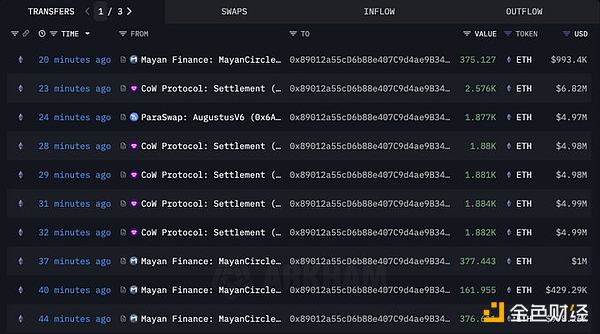
A typical escape route. It should have ended here. But...
Sui validators have other plans.
They directly banned the hacker's wallet from entering the Sui L1 network. Transactions of $162 million were frozen. The rest of the stolen funds? In digital prison.
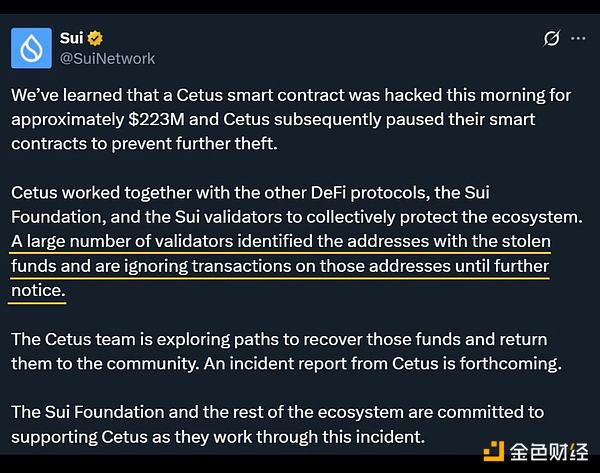
No court consensus required. No lengthy legal process required. Validators simply say “no”.
Wait, can they really do that? This is what blows everyone’s mind.
Yes, Sui validators can collectively reject transactions from specific wallets in extreme cases. This is not automatic and requires broad validator consensus. But it happens, and in real time.
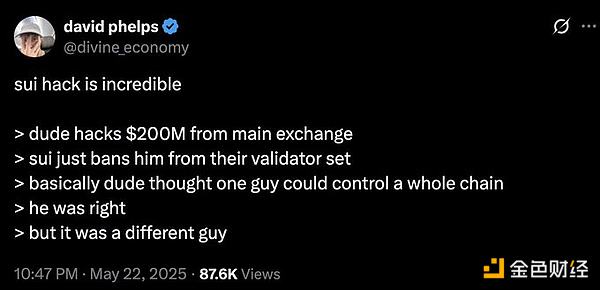
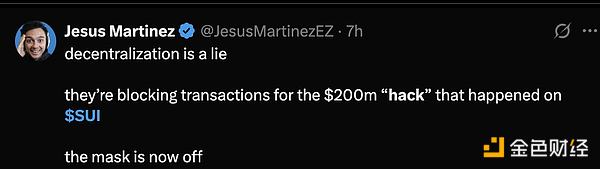
Some people say, "If they can freeze funds, is it really decentralized?"
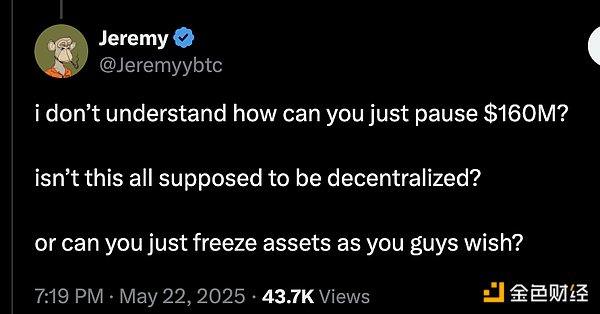
Some say, "They saved $162 million from being permanently stolen."
Both sides have valid points.
But the important thing is: this completely changes the assumptions about Layer-1 security.
The specific details are not clear at present, and no official incident report has been received.
Known information: The hacker took control of the liquidity pool denominated in SUI and systematically drained it. Cetus initially called it an "oracle vulnerability", but the full exploit method is still unclear.
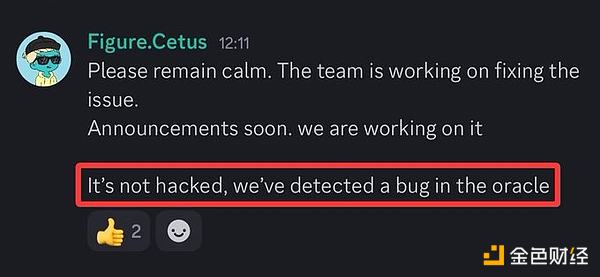
The response from Cetus was truly impressive:
Immediately suspending contracts to prevent further theft
Working with Sui Foundation and validators
Marking hacker accounts across the ecosystem
Working with professional anti-cybercrime organizations
Providing white hat settlement terms for professional damage control.
The Sui team said that most validators agreed to ignore any transactions from the hacker's wallet address, and issued a PR requiring each validator to deploy patch code so that they can take away the $160 million stolen by the hacker through unsigned transactions.
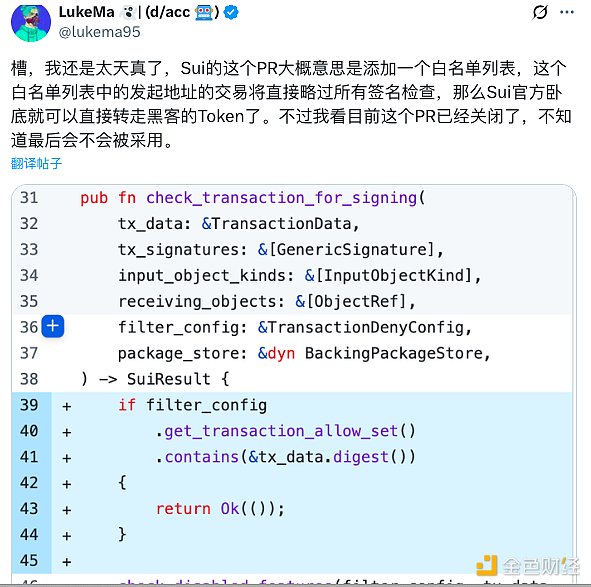
Sui's validator coordination speed is very fast. In the traditional financial field, it takes weeks to freeze the stolen funds. And here? It only takes a few hours.
Whether you think this is a good emergency response or a centralization problem depends on your perspective.
Thinking that one person could control the entire chain. He was right about control, but wrong about who had control.
It turned out that the problem was not with him, but with the joint efforts of the validators.
Collective power is greater than individual attacks.
Cetus is negotiating with the hacker to return the funds.
Legal measures have been initiated.
A full incident report will be released soon.
But the real question is: will other L1s adopt similar emergency mechanisms?
Recent claims of account seizures and lack of transparency at MEXC have raised significant concerns among users, echoing the cautionary tale of FTX's downfall.
AlexNigeria's Central Bank lifts the ban on bank-facilitated crypto transactions, signaling a significant policy shift and renewed market potential.
 Kikyo
KikyoCardano founder Hoskinson humorously engages with teen hacker Kurtaj’s cyber feats, highlighting wider cybersecurity and AI scam concerns.
AlexIlluvium's 2024 roadmap promises to revolutionize blockchain gaming with a focus on advanced technology, a public beta launch, and setting new industry standards.
 Brian
BrianMEXC, amidst claims of freezing assets and CEO’s social media mystery, denies allegations and asserts normal operations.
AlexJpeggler's investment in POPCAT secures its future, enhancing stability and trust within the Solana community.
KikyoBitMEX co-founder Arthur Hayes warns of the existential risks to Bitcoin from a potential U.S. spot Bitcoin ETF and TradFi involvement.
KikyoBG, unlicensed by VARA, potentially breached regulations by issuing and marketing ISLM tokens in Dubai without approval, requiring immediate cessation of activities and obtaining necessary VARA licenses.
AlexJapan's revised tax laws streamline corporate crypto taxation, aligning with investor norms and aiming to spark domestic entrepreneurial growth.
 Hui Xin
Polygon founder Sandeep Nailwal candidly reflects on 2023's challenges, embracing an underdog status amid fluctuating market performance.
Alex