DeFi data
1. Total market value of DeFi tokens: $109.823 billion
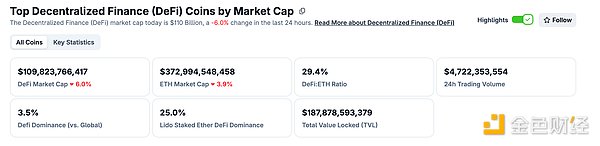
DeFi Total Market Cap Data Source: coingecko
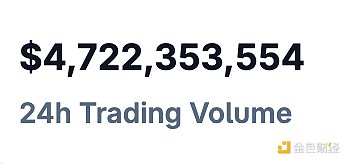
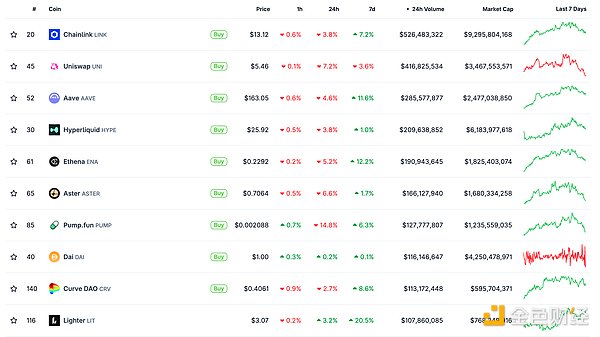
2. Trading volume of decentralized exchanges in the past 24 hours: $47.22
title="7425483" alt="7wtSLzM2UyR1UxDZFCzOSBz6mXSXfghyP5jns7SN.png">
Trading volume of decentralized exchanges in the past 24 hours. Data source: coingecko
3. Assets locked in DeFi: $123.869 billionbillion
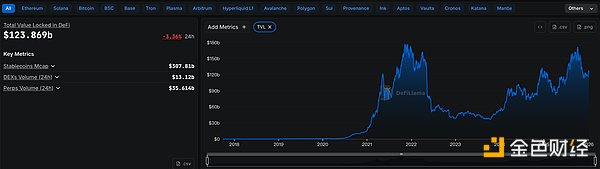
![]() Top 10 DeFi Projects by Locked Assets and Total Value Locked (Data Source: defillama)
Top 10 DeFi Projects by Locked Assets and Total Value Locked (Data Source: defillama)
NFT Data
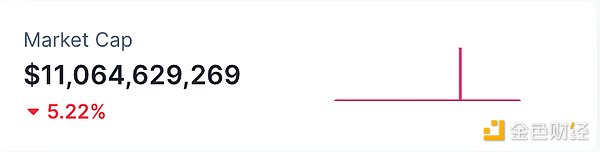
1. Total Market Cap of NFTs: $110.646 billion
alt="ZndijjNYktnyYycwe19Ulbwxokougp4Wzokzvmjt.png">
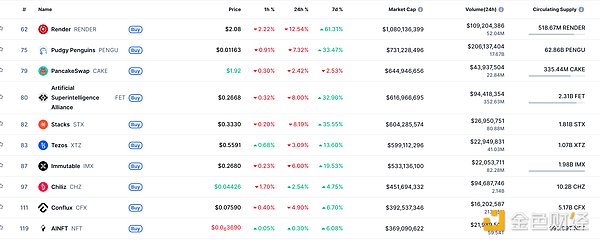
NFT Total Market Capitalization, Top Ten Projects by Market Capitalization Data Source: Coinmarketcap
2.24-hour NFT transaction volume: $1.479 billionUSD
![]()
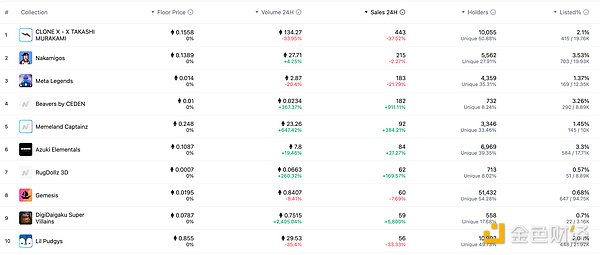
Top 10 NFTs by Sales Growth in the Last 24 Hours. Data Source: NFTGO
Toutiao
Ethereum Completes Final Step in Fusaka Upgrade, Officially Launches Final BPO Fork
On Wednesday, Ethereum completed its second and final "Blob-only" fork in this upgrade plan. This fork not only improved data availability but also demonstrated how the network can roll out smaller updates in stages.
MEME Hot Topics
1. Santiment: The crypto market is focusing on three hot topics: Meme coin, RWA, and ETFs
According to Jinse Finance, based on Santiment's social data, crypto investors' attention is rising in three directions: Meme coin prices have surged, and many well-known cryptocurrencies have rebounded due to retail investor enthusiasm, showing that community-driven speculation can still influence the market; Real-world asset tokens (RWA) are gaining popularity, with increased institutional fund inflows, and investors are including traditional assets such as on-chain bonds and real estate in their portfolios to diversify risk; Regarding ETFs, several large institutions have submitted applications for crypto asset ETFs, and spot ETFs are attracting a large inflow of funds, driving up prices, showing that structured investment tools can influence market trends.
DeFi Hot Topics
1. Zero Network, incubated by Zerion, has been shut down for over 3 weeks
According to Jinse Finance, crypto KOL @y_cryptoanalyst posted on the X platform that Zero Network, an L2 network incubated by Zerion, a Web3 wallet company that has raised a total of $22.5 million, has stopped producing blocks for over 3 weeks.
2. Opinion: The SEC is now entirely Republican, and 2026 will accelerate the formulation of pro-crypto regulatory policies
According to Jinse Finance, with the departure of anti-crypto Democratic Commissioner Caroline Crenshaw from the U.S. Securities and Exchange Commission (SEC), the SEC is now entirely Republican.
The Trump administration is consolidating control over the executive branch like never before, and a fully Republican SEC expected to accelerate pro-crypto regulatory policy-making by 2026, with internal opposition having subsided.
The SEC currently has three incumbent Republican commissioners: Chairman Paul Atkins, Hester Peirce (nicknamed Crypto Mom), and Mark Uyeda. Two seats are currently vacant, resulting in the first time all incumbent commissioners are from a single party—a situation described as unprecedented by US economic policy experts.
3. Ethereum's staking exit queue drops to zero for the first time since July 2025
According to Jinse Finance, market sources indicate that Ethereum's staking exit queue has dropped to zero for the first time since July 2025, while the waiting queue for staking has exceeded 1.46 million $ETH (approximately $4.6 billion), the highest level since November 2025.
4. Binance Futures launches TradFi perpetual contracts
According to Jinse Finance, Binance officially launched TradFi perpetual contracts on January 8, 2026, aiming to bridge the gap between traditional finance and digital assets.
The first contract, XAUUSDT (gold), will be available on January 5, 2026, and XAGUSDT (silver) will be launched on January 7, 2026. Users can trade through the Binance website or app.
5.Vitalik: Ethereum is more secure than reducing latency
According to Jinse Finance, Ethereum founder Vitalik Buterin stated on the X platform that "Ethereum is more secure than reducing latency. With the support of PeerDAS and ZKP, we already know how to scale, and theoretically, it can scale thousands of times compared to its current state. The relevant parameters will become more favorable before and after scaling. There are no physical laws that prevent the coexistence of 'extreme scale + decentralization'."
Reducing latency is completely different. We are fundamentally limited by the speed of light, and in addition, we are subject to the following real-world constraints:
1. The need to support nodes (especially validators) running in rural areas, homes, or businesses globally, not just data centers.
2. The need to provide censorship resistance and anonymity for nodes (especially proposers and validators).
3. Running nodes in geographically dispersed locations must not only be "feasible" but also economically sustainable. If staking outside New York results in a 10% drop in yield, in the long run, more and more people will choose to stake only in New York.
Ethereum itself must pass the "walkaway test," so we cannot build a blockchain that relies on continuous social coordination to maintain decentralization. Economic incentives cannot bear all the responsibility, but must bear the majority.
Of course, without making trade-offs, we can still significantly reduce latency on the existing basis, specifically including:
1. P2P network improvements (especially erasure coding) can reduce message propagation time without requiring individual nodes to increase bandwidth.
2. An availability chain with fewer nodes per time slot (e.g., 512 nodes instead of 30,000) can eliminate aggregation steps, allowing the entire critical path to be completed within a subnet.
These improvements are expected to deliver 3–6x performance gains. Therefore, I believe that moderately reducing latency to the 2–4 second level is entirely realistically possible. But Ethereum isn't a global video game server; it's a global heartbeat. If you need to build applications that are faster than a "heartbeat," they must include off-chain components. This is one of the key reasons why L2 will continue to exist for a long time, even if Ethereum achieves massive scaling. Disclaimer: Jinse Finance, as a blockchain information platform, publishes articles for informational purposes only and does not constitute actual investment advice. Please establish correct investment concepts and be sure to enhance your risk awareness.


 Weatherly

