Recently, I've noticed two interesting Web3 news items that I'd like to discuss with you.
First, Binance quietly launched Tesla (TSLA) related products, but instead of RWA (Real World Asset), it listed Perpetual (Perpetual Contracts).

Secondly, Paul Atkins, Chairman of the U.S. Securities and Exchange Commission (SEC), has recently made a series of public statements saying that the U.S. financial market may be fully moved to the blockchain within two years.
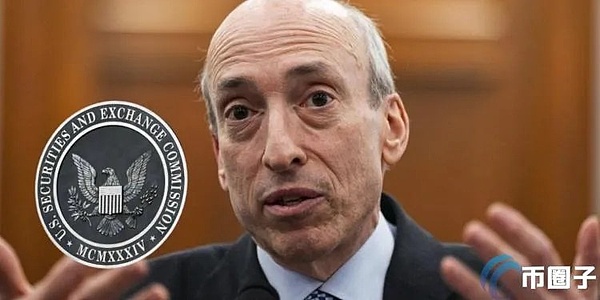
These two news items are strongly related, concerning the next direction of global asset liquidity, involving both economic issues and some interesting legal issues.
Let's first talk about Binance's attempt: from "brute force" to "stealth"
This is not the first time Binance has targeted Tesla.
Looking back at 2021, Binance launched its "equity token" with great fanfare, attempting to peg it 1:1 to real-world stocks, allowing users to hold shares on-chain and receive dividends. However, this product faced strong opposition from regulators in Germany and the UK due to allegations of illegal securities issuance, and was ultimately delisted. Back then, Binance's strategy was a "brute force" approach—directly transferring equity onto the blockchain, but it underestimated the power of traditional financial rules. Now, its approach has shifted to a more stealthy approach. The Tesla perpetual contract, launched in 2026, no longer links to share ownership, but only tracks price fluctuations; it doesn't promise dividends, only offers a bet on price increases or decreases. Users are not buying Tesla equity, but rather engaging in a pure price game. From "buying ownership" to "buying volatility," this shift, seemingly a retreat, is actually another roundabout exploration by crypto giants into the equity trading market within the existing legal framework. On-chain Tesla: Is it a "bet" or "goods"? Many people trading Tesla on Binance wonder if on-chain Tesla is equivalent to the US-listed Tesla. To answer this question, we must clarify the legal boundaries: Perpetual Contracts (Perp): You are buying a "bet." You are buying a contract, betting on price. The logic is simple: the purchased asset has extremely high liquidity, but its legal attribute is that of a "derivative." Once the platform faces liquidation risks, you have no physical assets to recover. RWA (Tokenized Assets): You're buying "goods." A token on the blockchain represents a gold bar or a share of stock in the vault. Its core is "ownership." This involves complex cross-border legal adaptations, asset custody, and physical penetration. Currently, Perpetual contracts may cool down speculative activity in the short term; however, in the long run, RWA in the US stock market is the ultimate solution for reshaping global financial liquidity. Backed by a Giant: Two-Year Plan by SEC Chairman Paul Atkins. If Binance's actions represent a grassroots "early start," then the regulators' repeated official statements signify the entry of the "regular army." Paul Atkins, the current chairman of the U.S. Securities and Exchange Commission, stated publicly on two separate occasions, in December 2025 and January of this year, that the U.S. financial market may fully migrate to on-chain within two years. Note this timeline: **two years**. In his "Project Crypto" blueprint, blockchain is no longer a regulatory nemesis, but rather the underlying operating system for improving transparency and enabling T+0 settlement. Currently, mature on-chain ownership transactions (RWA) have been implemented for commodities such as gold and silver. The move of U.S. stocks to the blockchain is no longer a technical question of "can it be done?", but a procedural question of "when to move it?" And with the specific roadmap already defined, these procedural issues are merely details that require proper compliance arrangements.
Exploring Dispute Resolution Clauses
In the current context of traditional finance being continuously restructured by Web3 technology, with a massive influx of capital and unclear rules, another key issue I focus on is:
How can we achieve efficient and fair resolution once a dispute arises?
On-chain transactions have the characteristic of "settlement is termination," while blockchain-related investment and financing often involve the legal rules of multiple jurisdictions. In the event of disputes such as breach of contract or protocol vulnerabilities, traditional court litigation often becomes a protracted tug-of-war due to jurisdictional disputes.
Compared to resorting to the courts after the fact, agreeing on reliable arbitration jurisdiction in advance has become an industry consensus.
Recently, my team and I have had several in-depth exchanges with professionals from major arbitration institutions such as the Singapore International Arbitration Centre (SIAC) and the Shanghai International Arbitration Centre (SHIAC) to jointly explore how to combine the resolution of large-value blockchain disputes with the impartiality and strong enforcement of international commercial arbitration. We look forward to further dialogue with more experts in the field of arbitration both domestically and internationally. In today's world of increasingly cross-border asset flows, we urgently need to establish a compliant arbitration path that deeply understands the underlying logic of technology and is recognized by mainstream legal jurisdictions. Conclusion: What exactly has Web3 brought us? Despite occasional regulatory tightening and growing pains in the industry, I firmly believe that the core of Web3 lies in freedom. It will inevitably restructure the entire financial system; the only uncertainty is how long this process will take—whether it will be the two years predicted by the SEC, or slightly longer. On-chain freedom means assets are no longer bound by physical national borders, and it also means ordinary people can share the benefits of global liquidity. The liberation of global asset liquidity is a clearly foreseeable future, and a crucial battleground in which our generation of legal professionals should actively participate. —Deconstructing the SEC's "Two-Year On-Chain" Proposal: The Path to Web3 Freedom, Promoting Further Liberation of Global Asset Flow. Original Author: Attorney Zhao Xuan


 Weatherly
